
Performance of the Prime Minister
An In-Depth Look
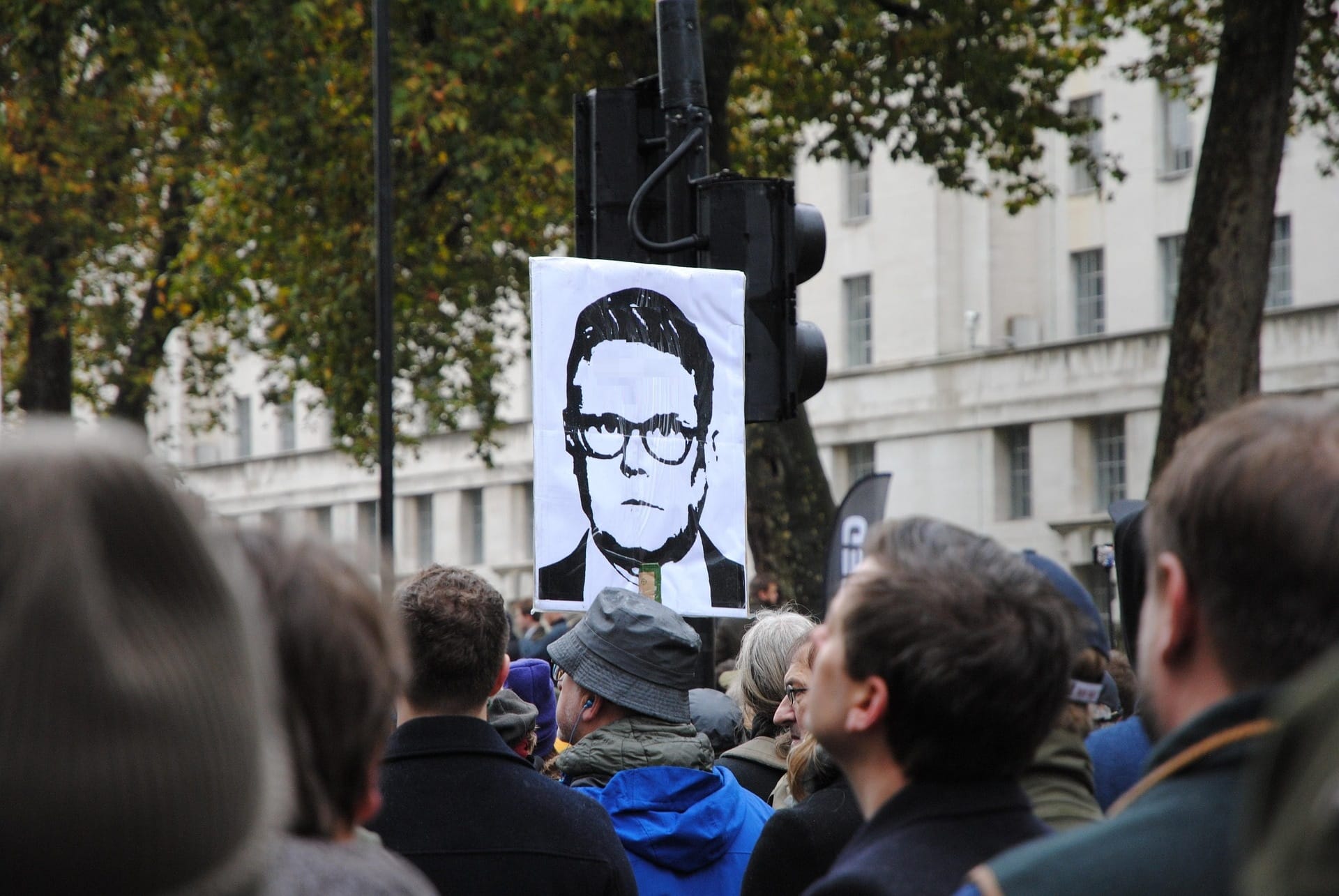
Below is a guide to the core duties of a Prime Minister and his accountability to Parliament and other bodies. Based on this reference guide, we express our opinion of his performance in fulfilling these duties, even though he often spends significant time abroad to avoid being questioned by parliament and the media. In his first 13 months in office, Starmer spent 63 of his 407 days either travelling or abroad on 29 different trips. Because his performance is quite negative, we have “looked on the bright side” and slightly exaggerated his performance as best we can!
Core Duties
Head of Government and Policy Direction
Leads the UK government and is responsible for overall policy and decision-making.
Forming and Leading the Cabinet and Ministerial Team
The Prime Minister appoints Cabinet ministers and other government ministers, decides their roles, and chairs Cabinet meetings.
Directing Government Policy
Sets priorities for domestic and foreign policy, and ensures that government departments carry them out.
Parliamentary Leadership and Legislation
Leads the government in the House of Commons, answers Prime Minister’s Questions (PMQs), and steers government bills and legislation.
Advising the Monarch and Constitutional Role
Advises the King on key constitutional matters, such as the appointment of ministers, the dissolution or prorogation of Parliament, and the formation of government.
National Security, Defence and Foreign Policy
Chairs the National Security Council, oversees intelligence agencies, and is responsible for decisions on military action, including authorising the use of nuclear weapons.
Economic Oversight and Budget
Works with the Chancellor of the Exchequer to shape economic policy, set the budget direction, and respond to financial challenges.
National Representation and Communication
Represents the UK at international summits (e.g., G7, UN, NATO, EU meetings when relevant) and in diplomatic relations with other nations.
Appointments and Honours
Recommends senior appointments such as judges, bishops of the Church of England, life peers for the House of Lords, and senior civil servants; advises on the honours list.
Crisis and Emergency Leadership
The department leads the government’s response to national crises such as natural disasters, major security incidents, or health emergencies.
Leadership and Internal Unity
Leads the ruling political party, maintaining party unity and political support within Parliament and the country.
Performance of Core Duties
It is relatively early in Keir Starmer’s premiership (he took office in July 2024), so a full retrospective judgment is slightly premature. Still, based on the evidence so far, one can assess how well he has been performing each of the core duties of a UK Prime Minister.
Head of Government and Policy Direction
Strengths - Starmer entered office quickly with high ambitions of significant reforms in housing, infrastructure, “workers’ rights,” and planning. Early in his term, he prioritised signalling a reset in government style, characterised by a calmer, technocratic, and less confrontational approach than many recent governments. He has already implemented changes in welfare policy (though contested) and proposed changes to public services (e.g., reducing bureaucracy in the NHS).
Weaknesses and Challenges - Many of his proposed reforms have been watered down, delayed, or met with internal opposition. For example, the welfare reform faced strong rebellion from Labour MPs, forcing compromises. Some critics argue that his start has been underwhelming, lacking boldness and direction. There is tension between ambitious transformation and the political and economic constraints (high debt, inflation, and public sector pressures) caused by certain factors (e.g., the Chancellor's first budget and migration policy, as well as associated costs).
Assessment (So Far) - He has set out a clear policy agenda and shown a willingness to act, but executing it, maintaining internal unity, and delivering tangible outcomes remain challenging.
Forming and Leading - the Cabinet and Ministerial Team
Strengths - In forming his first Cabinet, Starmer achieved gender parity (half of the ministers were female) and included key figures (e.g., Rachel Reeves as Chancellor). He also appointed some “outsiders and experts” (non-career politicians) to specific roles (such as in science, prisons, etc.) to bring in specialised expertise.
Weaknesses and Challenges - As with many new governments, cohesion and loyalty are still being tested. Internal rebellions (for example, over welfare reform) suggest challenges in keeping the party and Cabinet aligned. Some ministerial appointments “raised eyebrows”. Some reshuffles and resets in the ministerial teams indicate instability in Number 10’s messaging and coherence.
Assessment (So Far) - He has made questionable appointments and attempted to diversify his Cabinet's talent, but managing the depth of discipline and coherence remains a work in progress.
Directing Government Policy
Strengths - His main strengths lie in his steadiness, discipline, and technocratic competence. He has restored a sense of seriousness and order to government after years of turbulence, projecting reliability to business, civil servants, and international partners. His leadership style is pragmatic and focused on delivery, with clear priorities through his “Plan for Change.” The large parliamentary majority gives him room to legislate. At the same time, his willingness to make difficult choices—on fiscal restraint, welfare reform, and institutional overhaul—shows a readiness to govern rather than oppose.
Weaknesses and Challenges - Starmer’s weaknesses stem largely from perception and communication. Despite his authority in Parliament, he struggles to inspire the public, with consistently low personal approval ratings and a reputation for caution. His government can appear managerial rather than visionary, focused on process over passion. Internal Labour dissent over welfare and economic policies has revealed tensions between the leadership and backbenchers, while his centrist stance risks alienating parts of the party’s traditional left. Moreover, delivery challenges within Whitehall and friction with devolved leaders expose limits to his control and highlight implementation risks.
Assessment (So Far) - So far, Starmer’s premiership has been defined by stability and methodical governance rather than transformative zeal. He has positioned Labour as competent and responsible, aiming to rebuild trust in institutions and focus on practical progress. However, his cautious approach, limited public enthusiasm, and early struggles to translate plans into visible results leave open questions about his ability to turn stability into renewal. His success will depend on whether he can move from managing the state effectively to changing it meaningfully in the eyes of the public.
Parliamentary Leadership and Legislation
Strengths - He has managed to pass some key bills (e.g., welfare reform, albeit with compromises) and steer his legislative agenda through Parliament. His party holds a substantial parliamentary majority (he benefited from a landslide in 2024), which gives him structural leverage to pass legislation.
Weaknesses and Challenges - The welfare reform vote exposed fractures (49 Labour MPs rebelled) that signalled a limit to his control and the necessity of compromise. Some of his proposals are ambitious and complex (welfare, housing, public sector reform), increasing the risk of delays, opposition, or dilution. Public and media criticism of certain policy aspects (e.g., benefit cuts, winter fuel payments, farm inheritance, digital ID cards, changes to payments) has also increased political pressure.
Assessment (So Far) - He is exercising his parliamentary strengths, but managing dissent and turning grand plans into effective law without overreach and rebellion has become a central challenge.
Advising the Monarch and Constitutional Role
This duty is less visible, but early indications are that Starmer has operated within the norms. He was duly invited to form the government by King Charles III after Labour’s victory. There have been no obvious constitutional crises or breakdowns that have emerged under his premiership yet.
Assessment (So Far) - Neutral to positive with no evident failures, but also no dramatic constitutional tests yet.
National Security, Defence and Foreign Policy
Strengths - He moved quickly to re-engage on the world stage within days of being PM. He attended a NATO summit, hosted by leaders, and prioritised defence relationships. He pledged to meet NATO's defence spending targets (2.5% of GDP) and committed to a “root and branch” review of the armed forces. On foreign policy, he has continued the UK's support for Ukraine, while also taking steps in the Middle East, including calling for ceasefires, providing humanitarian aid, and formally recognising Palestinian statehood. He negotiated the return of the Chagos Islands to Mauritius, accepting a multibillion‐pound cost over time. There is also a question of whether he considers China an enemy of the state and a threat to national security, or an ally.
Weaknesses and Challenges - Some of his foreign policy moves (e.g., recognition of Palestine) attract sharp criticism and risk diplomatic tensions. Implementation, consistency, and clarity in foreign and security strategy remain under scrutiny. In defence, the pressure of costs and resource constraints is heavy; meeting ambitions will be harder than pledging them.
Assessment (So Far) - Among his stronger areas, he has made bold signals on the world stage, reasserted the UK’s international role, and appears willing to make difficult decisions. The test will be consistency, resources, and diplomacy under strain.
Economic Oversight and Budget
Strengths - Starmer’s Chancellor, Rachel Reeves, delivered a significant fiscal package (the October 2024 Budget) involving tax increases and changes to National Insurance, signalling a willingness to confront difficult economic choices. He has defended “tough decisions” (e.g., cutting certain pension payments) to restore fiscal stability.
Weaknesses and Challenges - The tax burden under his government is projected to be very high (the highest ever recorded levels), according to some forecasts, which could lead to a backlash. His government is under pressure from inflation, public sector wage demands, and rising debt, all of which constrain the scope for generous policy. Popular discontent is growing, as indicated by opinion polls, in which many believe the government has already made things worse. Polling suggests his approval rating on economic performance is weak.
Assessment (So Far) - His high-risk agenda has shown willingness to make complex economic decisions, but the public and markets may not give him much room for error. Financial performance will likely be a key factor in determining his success, given the bleak economic outlook.
National Representation and Communication
Strengths - His early diplomatic engagements and attendance at summits have given him visibility and legitimacy abroad. He has attempted to project a calmer, more competent, less scandal-prone style relative to recent tumultuous governments.
Weaknesses and Challenges - His public approval and favourability ratings are weak. In August 2025, approximately 24% of Britons viewed him positively, while 68% viewed him negatively, resulting in a net rating of minus 44. Another poll shows that just 22% of the British public hold a favourable view of him, while 69% hold an unfavourable view. In IPSOS surveys, half of Britons say his changes have made things worse. Early media commentary has criticised stumbles, communication gaps, and a lack of clarity in messaging.
Assessment (So Far) - This is a significant weakness. No matter how effective his policies are, weak public communication and low approval create a credibility problem in governance and legitimacy.
Appointments and Honours
Strengths - When he formed his first Cabinet (immediately after the 2024 election), Starmer appointed ministers well known from earlier Labour governments (e.g., Hilary Benn, Yvette Cooper, Ed Miliband). Some appointments were intended to broaden expertise or bring in outside talent (e.g. selecting a scientist, Patrick Vallance, for a ministerial role). He has also shown willingness to reverse or cancel appointments he finds problematic, signalling that appointments are not irrevocable. For instance, he cancelled the appointment of Gwyn Jenkins as national security adviser.
Starmer seems to be steering appointments toward diversity and representation. In his public statements about the honours system (which overlaps somewhat with appointments), he has emphasised that honours (and by extension, recognition and appointments) should reflect the “length and breadth” of the UK and include underrepresented communities.
Weaknesses and Challenges - Starmer appointed Richard Hermer as Attorney General, despite Hermer not being a parliamentarian, and arranged for him to be elevated to the House of Lords (a life peerage) to facilitate this role. A recurring criticism is that some appointments (or nominations for peerages) have a cronyism dimension. For example, the elevation of Sue Gray (former chief of staff) to the peerage has been noted in that context. The most significant controversy has involved the appointment of Peter Mandelson as the United Kingdom's Ambassador to the United States. This drew severe backlash over his past associations (notably with Jeffrey Epstein). After public pressure and revelations, Starmer sacked him. Critics argue the initial appointment showed poor judgment and that the vetting process was inadequate. Some appointments (especially in politically sensitive roles) have been questioned on grounds of insufficient transparency or lack of clarity over the selection process. Critics argue that in some cases, political loyalty may have been favoured over an open, competitive process. Starmer appointed a prominent lobbyist (Iain Anderson) as a non-executive director in a government department, which has drawn scrutiny, because his private-sector connections and clients might overlap with government interests.
Assessment (So Far) - On balance, Starmer has shown ambition in using appointments and honours to reshape parts of government (notably the Lords) and to bring in non-traditional or cross-sector talent. He has given public signals that he wants a more inclusive honours system and has tried to exercise oversight (by revoking or cancelling problematic appointments). However, controversies (primarily the Mandelson affair) show that the constraints of vetting, judgment, transparency, and resisting cronyism remain serious tests.
Crisis and Emergency Leadership
It is too early for many major crises under his watch to be fully assessed, but he has had to contend with inherited public sector stresses, inflation, and social discontent. The 2024 riots and violent disorder required a response, in which he announced a National Violent Disorder Programme to coordinate police efforts. However, some of the results of this seemed unbalanced and unfair, with a noticeable “two-tier policing” system introduced, along with the “policing of online comments” and the erosion of “freedom of speech.” He also branded the Southport rioters as “far right”. However, it was later shown that the rioters were just residents reacting to the killing of children by a believed illegal immigrant. Starmer and the Labour Party also refer to the Reform UK Party as “racist” as Reform wants to deport all illegal immigrants and their families. In Grenfell Tower’s final report, he apologised (on behalf of the state) and pledged accountability and stricter procurement practices.
Assessment (So Far) - Starmer’s cautious instincts can shade into hesitation, leaving him open to charges of slowness or lack of moral clarity. This was evident in his initial response to the Gaza crisis, when some perceived a reluctance to overcommit as a sign of weak leadership, only for him to later adopt a firmer stance. Similarly, in internal party disputes, he has struggled at times to assert unambiguous authority, highlighting the challenge of crisis leadership within his own ranks.
Overall, it remains to be seen whether Starmer's crisis leadership traits will scale effectively to the demands of a significant, fast-moving national or international emergency.
Leadership and Internal Unity
Strengths - He delivered a landslide in 2024, showing his control and appeal within the party (at least electorally). He has continued positioning Labour as more centrist, attempting to unify moderates and appeal to a broad base.
Weaknesses and Challenges - The rebellion over welfare reform revealed the limits to his authority and the lack of buy-in across party lines. Some on the left of his party feel alienated with criticisms that Starmer has drifted right on immigration, welfare, and Gaza, causing tensions.
Internal discipline in messaging and consistency remains a challenge (reshuffles in communications).
Assessment (So Far) - While strong in winning power, maintaining internal solidarity across ideological differences remains a persistent challenge, especially given the tensions of reform and austerity.
Overall Assessment and Outlook
Strengths (So Far) - Starmer has repositioned Britain’s leadership image, acted decisively in foreign affairs, set an ambitious agenda, and shown willingness to confront difficult fiscal choices.
Weaknesses (So Far) - He faces a communications and popularity deficit, internal party strains, diluted policy outcomes in some areas, and a precarious economic environment that constrains what he can deliver.
Key Risks Ahead - Economic downturn, public backlash over reforms, party rebellions, international crises, or policy failures could erode his mandate.
In Summary - The performance has been mixed so far, with insiders leaning toward cautious optimism, but substantial vulnerabilities remain. Whether Starmer succeeds in fulfilling all the duties of the office will depend heavily on the next one to two years.